

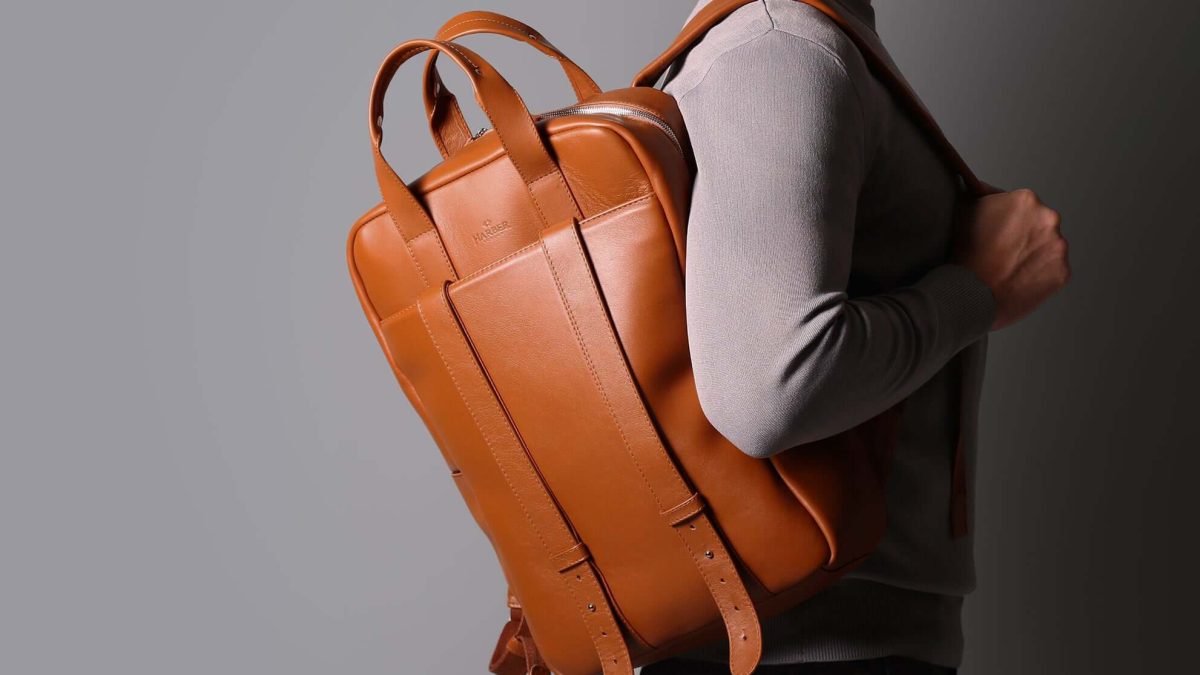
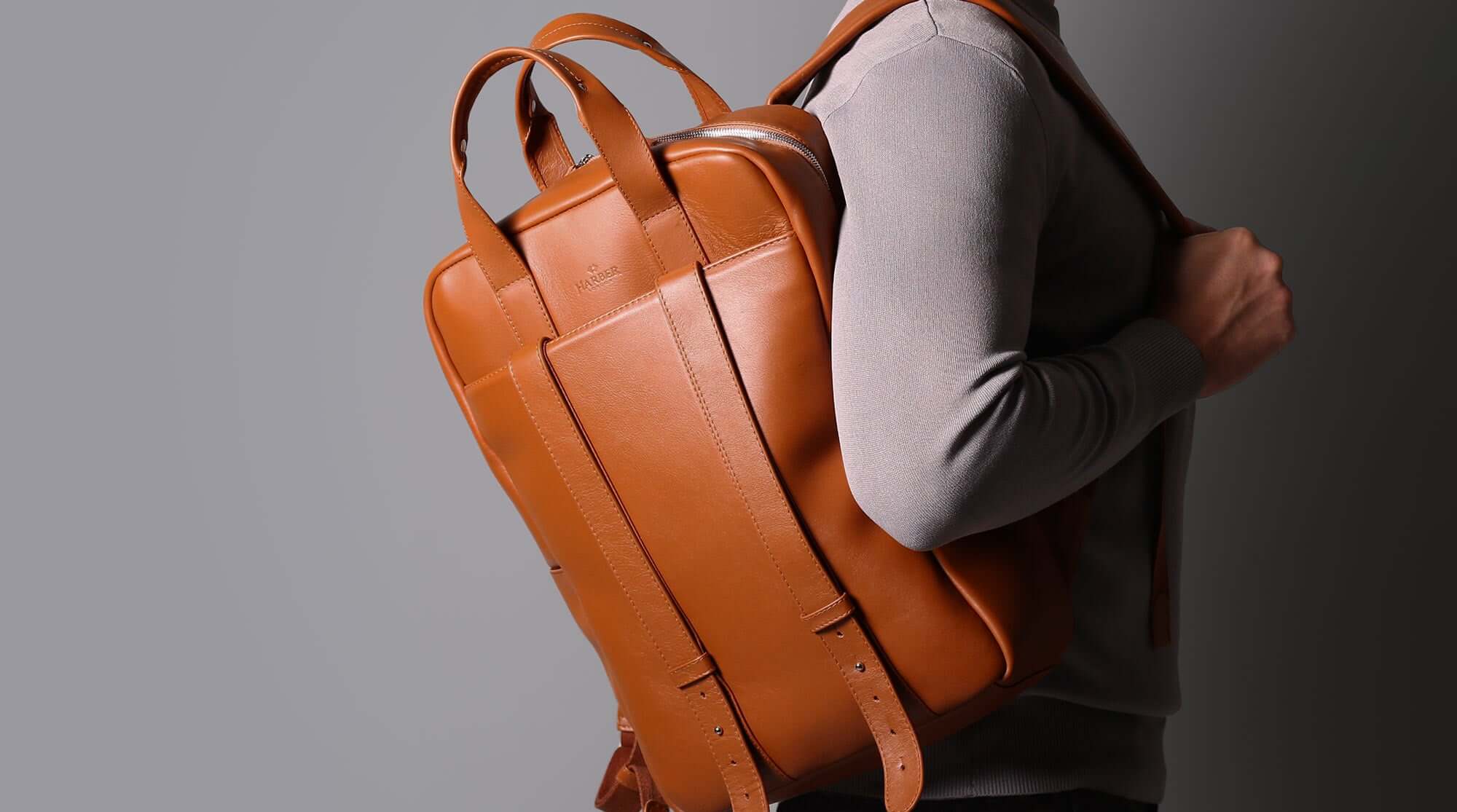
A leather backpack for men is a full-grain or top-grain leather carry bag engineered for the male frame — typically 18 to 35 litres in capacity — with wider shoulder straps, a broader back panel, laptop protection, and a structured, minimal aesthetic designed for professional commuting, daily carry, and travel without compromising on durability or long-term material quality that holds up under daily loads of 5 to 10 kilograms.
The men’s leather backpack category has grown 14% year-on-year since 2022 according to market tracking data. The driver is not fashion trends — it is replacement fatigue. Men are tired of buying a new synthetic bag every 18 months when the zippers fail, the fabric frays, and the shoulder padding compresses to nothing. They want a single bag that handles the commute, the weekend trip, and the airport without falling apart or looking unprofessional in any of those contexts.
This guide covers what actually matters when choosing a mens leather rucksack — the leather grade, the construction quality, the sizing, the features, and the maintenance routines that separate a bag you will use for 15 years from one you will replace in 15 months.
Why Should Men Switch to a Leather Backpack?
Durability economics tell the whole story. A full-grain leather backpack male buyers invest $180 to $300 in will last 15 to 20 years with basic care. A premium synthetic backpack at $120, replaced every 3 years, costs $600 to $800 over the same period. The leather option is not marginally cheaper — it is 50 to 60% cheaper over any timeframe longer than 5 years. And you end up with one bag that has developed genuine character instead of a trail of discarded synthetics.
Material ageing is the second decisive factor. Synthetic fabrics degrade visibly — they pill, fade, fray at stress points, and develop a tired, used-up appearance within 2 years of daily use. Full-grain leather does the exact opposite. It develops a patina that deepens with handling, darkens at high-contact points like handles and strap connections, and creates a visual character unique to the individual bag. A 5-year-old leather daypack for men looks better than a brand-new nylon equivalent. The material literally improves with the wear that destroys synthetic alternatives.
Professional range is the third advantage. A leather backpack transitions from office to airport to weekend to restaurant dinner without requiring a different bag for each context. Try doing that with a technical hiking backpack, a branded gym bag, or a logo-covered nylon daypack. The synthetic bag looks right in one specific context and wrong in every other. Leather works everywhere because the material communicates quality universally across cultures, dress codes, and settings.
Rustic Town’s leather backpack for men collection covers the full range — daily commuters, laptop carriers, and full-size travel packs, all in full-grain leather handcrafted in Rajasthan.
What Size Leather Backpack Do Men Actually Need?
| Carry Profile | Volume | Fits | Best Style |
| Minimal daily carry | 15–20L | Laptop, phone, wallet, keys, lunch | Slim leather daypack |
| Full daily carry | 20–28L | Laptop, gym gear or change of clothes, tech | Mid-size leather rucksack |
| Travel carry-on | 28–35L | 3 days clothing, laptop, toiletries | Full-size leather travel backpack |
| Extended travel | 35–45L | 5+ days clothing, shoes, accessories | Large leather rucksack |
Most men oversize their backpack. The 20 to 28-litre range covers 85% of male daily carry scenarios including a 15-inch laptop, a water bottle, lunch, and tech accessories. Only size above 28 litres if you regularly carry gym gear alongside work essentials or use your backpack as a travel carry-on. An oversized bag that is not full looks shapeless, carries poorly because the contents shift, and undermines the professional aesthetic that makes leather worth choosing.
What Features Matter Most in a Men’s Leather Backpack?
Padded laptop compartment.
A dedicated, padded sleeve that holds a 14 to 16-inch laptop securely against the back panel. This is non-negotiable for any working professional. The laptop should never share unpadded space with water bottles, chargers, or books. Rear-panel placement puts the heaviest item closest to your back, improving weight distribution and reducing the forward lean that strains the lower back on walking commutes.
Wide, padded shoulder straps.
Straps under 5cm wide will dig into the shoulders under load within 30 minutes. For a mens leather rucksack that regularly carries 5 to 8kg, wide padded straps with adjustable chest strap option distribute weight correctly across the shoulder surface and prevent the strap-slip that restricts arm movement during walking commutes and cycling.
Quick-access external pocket.
Phone, transit card, keys, earbuds — the items you reach for 10+ times daily without wanting to open the main compartment. An external zip pocket on the front panel eliminates the stop-open-dig-find cycle that slows every commuter at every doorway, turnstile, and security checkpoint.
Reinforced base panel.
A leather backpack for men that sits on office floors, train platforms, café tables, and gym changing rooms every day needs a reinforced base that resists scuffing, moisture, and compression damage. Metal feet, a double-layered leather base, or a rigid internal base panel extend the bag’s useful life by 3 to 5 years compared to a single-layer base construction.
Clean, minimal aesthetic.
The current trend in men’s leather accessories is restraint. Minimal external branding, clean zip lines, and a structured silhouette that reads professional without trying to be fashion-forward or trendy. The leather itself is the design statement. Decorative elements, oversized brand logos, and excessive external straps date the bag within a single season and limit the professional contexts where it looks appropriate.
What Leather Colours Work Best for Men?
| Colour | Best Context | Pairs With | Patina Development |
| Dark Brown / Walnut | Universal — office to travel | Navy, grey, earth tones, denim | Rich, warm darkening over 2–3 years |
| Antique Brown | Smart-casual, creative industries | Brown leather shoes and belts | Deep mahogany character by year 3 |
| Black | Corporate, formal, tech | Suits, all-black, monochrome outfits | Subtle lustre deepening |
| Tan / Cognac | Casual, weekend, travel | Light neutrals, denim, linen | Most dramatic amber patina — fastest visual change |
Dark brown is the most versatile single-colour choice for men. It works with navy suits, grey chinos, denim, and weekend casual wear without requiring colour-matching effort. Black is the safest choice for conservative corporate environments but develops less visible patina character. Cognac makes the strongest visual statement and ages most dramatically but limits professional versatility.
How Do You Maintain a Men’s Leather Backpack?
Men’s leather bags take more daily abuse than women’s — heavier loads, more floor contact, more weather exposure, and less careful handling on average. Condition every 3 months with a leather balm designed for full-grain leather. Use a product with beeswax or lanolin base rather than petroleum or silicone which seal the surface and prevent the patina development that makes the bag improve over time.
Clean dirt, salt, and sweat stains promptly with a damp cloth and mild pH-neutral leather cleaner. Salt from winter roads and perspiration from summer commutes are the two most common sources of long-term leather damage — both are easily prevented with prompt wiping after exposure.
Apply a water-resistant leather spray at the start of each season if you commute in rain-prone areas. This does not waterproof the bag — no treatment truly waterproofs leather — but it creates a surface barrier that gives you a working margin in light rain and drizzle, prevents water spotting, and buys you time to dry the bag naturally.
Pay particular attention to the base. Men’s backpacks accumulate ground dirt faster than women’s because they are set down more frequently and on rougher surfaces — gym floors, pub tables, train carriage floors. Wipe the base weekly with a damp cloth. This single 30-second habit prevents the gradual discolouration that makes the bottom third of neglected bags look permanently dirty within a year.
Browse Rustic Town’s full leather daypack for men collection — every model uses full-grain leather, hand-stitched seams, and brass hardware built for years of demanding daily use.
Leather Backpack for Men: Key Market Data
| Metric | Value |
| Men’s leather backpack market growth (YoY) | 14% since 2022 |
| Average daily carry weight for male commuters | 5–8 kg |
| Full-grain leather backpack lifespan | 15–20+ years |
| Synthetic backpack replacement cycle | 18–36 months |
| Cost per year: $200 leather bag over 15 years | $13.30 |
| Cost per year: $120 synthetic bag replaced every 3 years | $40 |
Frequently Asked Questions: Leather Backpacks for Men
Q: What is a leather backpack for men?
A: A full-grain leather carry bag designed for the male frame — wider straps, broader back panel, 18 to 35-litre capacity, and a structured minimal aesthetic suited for daily commuting, professional use, and travel across all contexts.
Q: What is the best size for daily commuting?
A: 20 to 25 litres. This fits a 15-inch laptop, documents, lunch, water bottle, and tech accessories without oversizing the bag or creating unused volume that makes it look shapeless when carried.
Q: Can men carry a leather backpack to a corporate office?
A: Yes. A dark brown or black full-grain leather backpack with minimal branding and clean hardware is appropriate for most corporate environments including client-facing roles in consulting, finance, and law.
Q: How long does a men’s leather backpack last?
A: 15 to 20+ years with quarterly conditioning and basic weekly cleaning. Full-grain leather develops character with age rather than degrading, making it the longest-lasting backpack material commercially available.
Q: What should a quality men’s leather backpack cost?
A: $150 to $400 for full-grain leather with brass hardware and double-stitched construction. Below $100 typically indicates lower leather grades, synthetic linings, or machine-only stitching that reduces structural longevity.
Q: Is a leather backpack too heavy for daily carry?
A: A quality leather backpack weighs 1 to 1.5kg empty — comparable to premium synthetic backpacks with internal frames. The 200 to 400g weight difference versus nylon is undetectable when carrying a typical 5 to 8kg daily commuter load.
Q: Will a leather backpack work for gym and office on the same day?
A: A 23 to 28-litre model handles the dual carry comfortably — laptop and documents in dedicated compartments, gym shoes and change of clothes in the main section. Use a separate shoe bag inside to keep gym items isolated from work essentials.
Shop the complete Rustic Town mens leather rucksack range — built for professionals who want one bag for every context.
Written by the Rustic Town Editorial Team | Updated January 2026
Rustic Town has been handcrafting leather goods in Rajasthan, India since 2013. Every bag in the collection uses full-grain or vegetable-tanned leather, brass hardware, and hand-stitched construction built to last decades.